I. Background and Mission of the Alliance
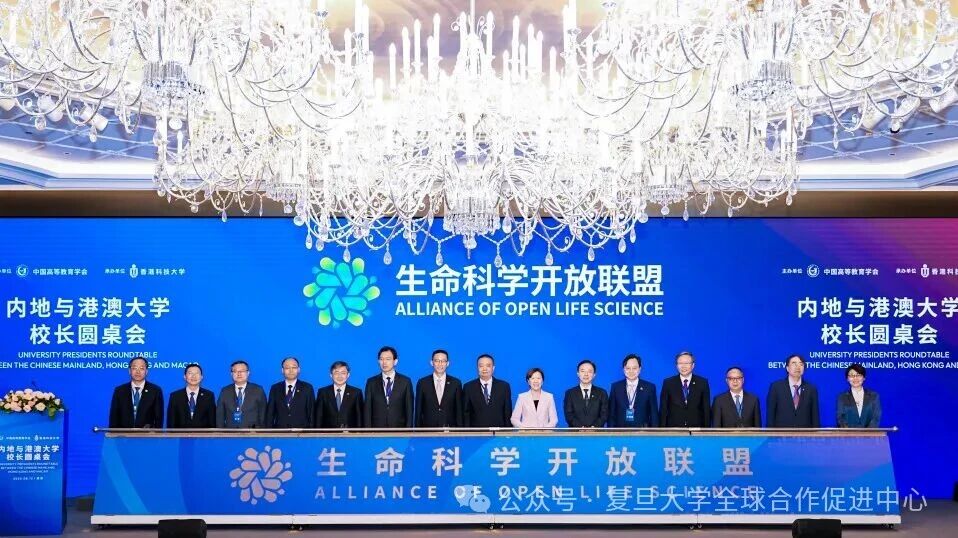
The Open Life Science Alliance was officially established in Hong Kong on August 12, 2025. At the Roundtable Meeting of Presidents of Mainland, Hong Kong, and Macao Universities held on the same day, a total of 15 institutions, including nine top mainland universities and new research institutions such as Fudan University, Tsinghua University, Peking University, Shanghai Jiao Tong University, Zhejiang University, Xiamen University, Sun Yat-sen University, Westlake University, and Shenzhen Academy of Medical Sciences, as well as six universities in Hong Kong and Macao including the University of Hong Kong, the Chinese University of Hong Kong, the Hong Kong University of Science and Technology, the Hong Kong Polytechnic University, the City University of Hong Kong, and the University of Macau, jointly initiated the establishment of the Alliance. Huai Jinpeng, Minister of Education, Luo Yonggang, Deputy Director of the Liaison Office of the Central People's Government in the Hong Kong Special Administrative Region, Choi Yuet-lin, Secretary for Education of Hong Kong, and Lin Huiqing, President of the China Association of Higher Education, witnessed the establishment of the Alliance.
The inaugural council of the alliance is jointly led by Academician Jin Li, President of Fudan University, Academician Shi Yigong, President of Westlake University, and Academician Ip Yuk-yee, President of Hong Kong University of Science and Technology. The secretariat of the alliance is permanently located at Fudan University, responsible for coordinating daily operations; the Hong Kong representative office is located at Hong Kong University of Science and Technology, aiming to fully leverage the international exchange and innovation advantages of the Guangdong-Hong Kong-Macao Greater Bay Area.
Alliance Mission:
Collaborate with partners in the global life sciences sector to promote high-level collaborative innovation that emphasizes openness and sharing.
Alliance Vision:
We are committed to building a truly open global life science community, pooling advantageous resources from around the world through inclusive governance, and creating a global innovation network and a hub for talent cultivation. This will play a significant role in benefiting human health and addressing global challenges.
Alliance official website:https://openlifesci-alliance.org/
The establishment of the alliance is a positive response to UNESCO's call for open science, aiming to address the global challenge of human health. The alliance firmly believes that only through open cooperation and collaborative research that transcends geographical boundaries can we drive paradigm shifts in the field of life sciences, foster breakthrough discoveries, and provide core support for enhancing human health and well-being and addressing global challenges.
II. In response to the suggestions for open science, the alliance advocates for strengthened cooperation and exchange within the global life science community
Life and health are fundamental well-being of humanity and a common challenge faced by the global community. Unlocking the ultimate mysteries of life and health and significantly enhancing human health levels is the relentless pursuit of the life sciences community. In the face of a series of ultimate questions in the field of life, only by strengthening global open cooperation and pooling global efforts to tackle key challenges can we drive a new round of paradigm shifts in life sciences, make new breakthrough discoveries, and provide new support for safeguarding human health. From the Human Genome Project to the Human Proteome Project, from the International Brain Project to the Human Phenome Project, it is the cooperation and collaboration within the global life sciences community that have allowed humans to gain deeper and clearer insights into the complex system of life. This has made precision diagnosis and treatment of diseases, as well as proactive health management, increasingly commonplace, paving the way for infinite possibilities in transforming life and even designing it for humanity. After its establishment, the alliance will lead and promote the integrated development of technological and industrial innovation in the field of life sciences, create a global innovation network and a hub for talent cultivation, and play a significant role in benefiting human health, addressing food crises, extreme weather, and other common challenges faced by all humanity.
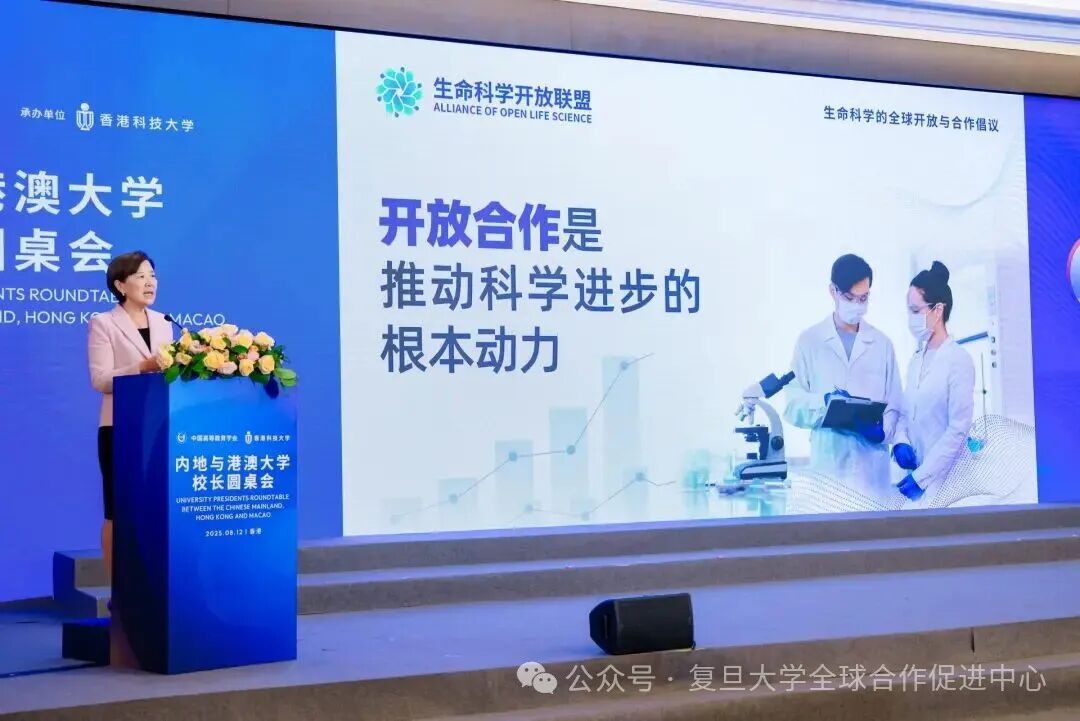
At the launch ceremony, Yip Yuk-yee, President of Hong Kong University of Science and Technology, delivered the Global Opening and Cooperation Initiative for Life Sciences on behalf of the alliance, calling on the global life sciences community to fully respond to UNESCO's recommendations on open science, adhere to the principles of openness, cooperation, exchange, and collaboration in global life sciences research and innovation, and jointly promote human health and well-being. The Initiative proposes that the Life Sciences Opening Alliance will focus on promoting international cooperation in four areas in its future operations: first, collaborative talent cultivation, jointly exploring outstanding talents capable of safeguarding and promoting human health needs in the future, and strengthening global exchanges between students and scholars in the field of life sciences; second, collaborative research and innovation, focusing on ultimate scientific issues and frontier fields in the field of life and health, continuously strengthening global scientific research cooperation and collaborative innovation, and enhancing the transnational innovation network in life sciences; third, resource opening and sharing, jointly promoting the compliant opening and global sharing of scientific research literature resources, scientific research facility resources, scientific research data resources, and biological sample resources; fourth, multi-mode promotion of transformation, guided by human health needs, uniting the global scientific and industrial communities to break down barriers between production, teaching, and research, jointly accelerating the transformation of research results, and allowing more members of the public to enjoy the fruits and dividends of cutting-edge life sciences research at an early date.
Jin Li, CAS Member and President of Fudan University, introduced at the first meeting of the Alliance Council that the Open Life Science Alliance welcomes and will actively invite top universities and research institutions in the biomedical field from around the world to join. At the same time, special support will be given to institutions from developing countries and regions to join the Alliance. This will become the focus of the Alliance's work in the coming period..
III. Build high-quality public products and create a flagship platform for international cooperation in the field of life sciences
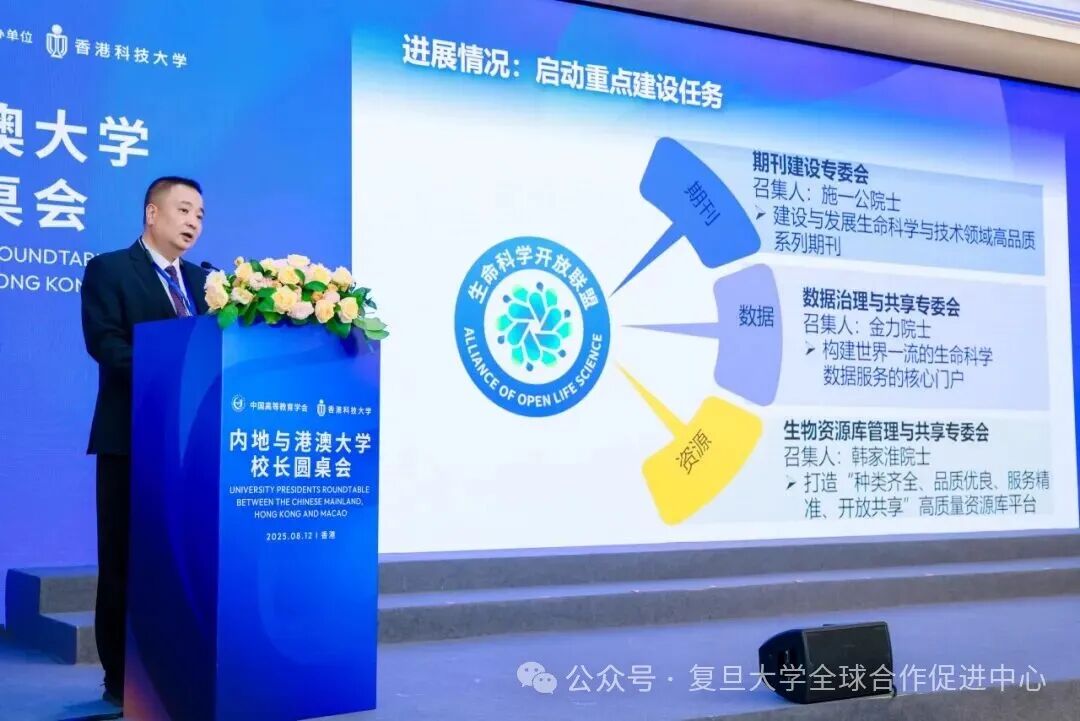
The alliance comprises several specialized committees that pool resources from various parties to develop a series of high-quality public products that can be easily shared within the global life sciences community. Initially, the focus will be on high-level international journals, scientific research data submission platforms, biological resource banks, and pathways for the transformation of scientific research achievements.
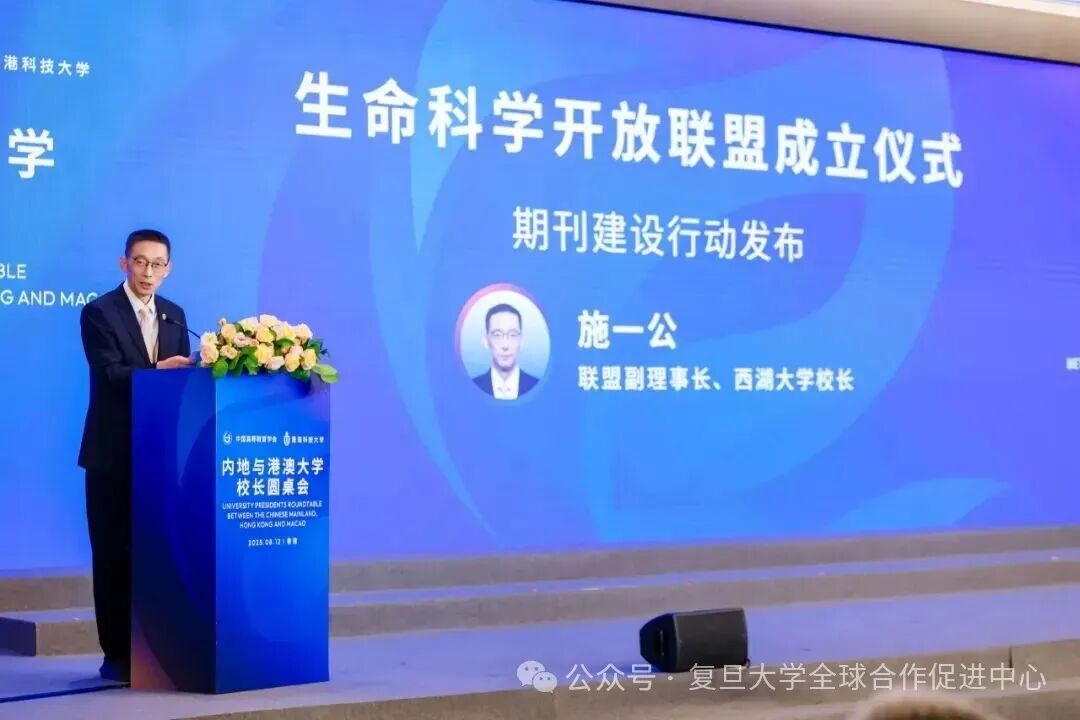
Under the framework of the Open Life Science Alliance, all participating parties will collaborate to jointly build a world-class series of life science journals with international influence and Chinese characteristics. Shi Yigong, convener of the Special Committee for Journal Construction, CAS Member, and President of Westlake University, introduced at the Alliance Council meeting that a series of high-level journals in the field of life will be established in the form of main journal + sub-journals. The new main journal Vita will be hosted and published by Higher Education Press, led by Westlake University, and built upon the contributions of all alliance units. Professor Li Dangsheng, former Editor-in-Chief of the journal Cell Research, and Professor Shi Yigong, President of Westlake University, will be invited to serve as the Editor-in-Chief of the new journal Vita. The Vita series of journals will adopt an open access model, explore new evaluation mechanisms, and strive to run an international top-tier academic journal that conforms to journal publishing principles, purifies the academic environment, serves life science innovation, and promotes high-level development in the discipline. It aims to promote harmonious co-governance of scientific integrity and academic publishing, providing a new platform for high-quality academic exchange and dissemination in global life science research. At the same time, the Open Life Science Alliance will actively explore the use of new technologies such as blockchain to empower and prepare an academic preprint publishing platform, recording the entire process of scientific research from submission, review, peer review to formal publication, and synchronously submitting scientific research data to achieve data first, results traceable.
The compliant open sharing of scientific research data is an important prerequisite and foundation for open science. Jin Li, convener of the Data Platform Special Committee, introduced that the Life Science Open Alliance will build an international scientific research data open ecosystem, establish scientific data governance and sharing rules, and simultaneously construct a high-quality data compliant open platform. Based on the current national laws, regulations, and system layout, the alliance's data platform will focus on solving the problems of compliant flow and cooperative use of scientific research data. It will use the construction of standard systems, open systems, and security mechanisms as the cornerstone to address the usability and openness of data from different sources. Jin Li hopes that the alliance will fully leverage the geographical and institutional advantages of universities in Hong Kong and Macao to promote the cross-border circulation and compliant openness of life science research data.
Biological resources such as biological germplasm and experimental samples are key material resources for life science research. Han Jiahua, CAS Member and academician of Xiamen University, who is also the convener of the Special Committee of Biological Resource Bank, revealed in his introduction that the Open Life Science Alliance will rely on and leverage the advantages of China's established high-quality biological resource bank platforms and systems, and strive to build a high-quality resource bank platform featuring complete types, excellent quality, precise service, and open sharing. This platform will establish an open, fair, and efficient resource sharing mechanism to provide convenient resource acquisition and technical support services for scientific research institutions, universities, enterprises, and others. At the same time, the alliance will also rely on the platform to provide high-quality training services for universities and scientific research institutions to more effectively utilize, maintain, and preserve biological resources, organize international technical exchanges and cooperation, and continuously improve the professional abilities of practitioners in resource identification, information management, biosafety, and standardized operation.
The alliance will also leverage the synergistic advantages of the Greater Bay Area in terms of industry, technology, finance, and international cooperation, accelerate the construction of the National University Regional Technology Transfer and Transformation Center in the Greater Bay Area, open up efficient pathways for the transformation of scientific research achievements, and explore mechanisms for the transformation and industrial incubation of achievements between the mainland and Hong Kong and Macao.

Copyright © Center for Advancing Global Collaboration Fudan University
