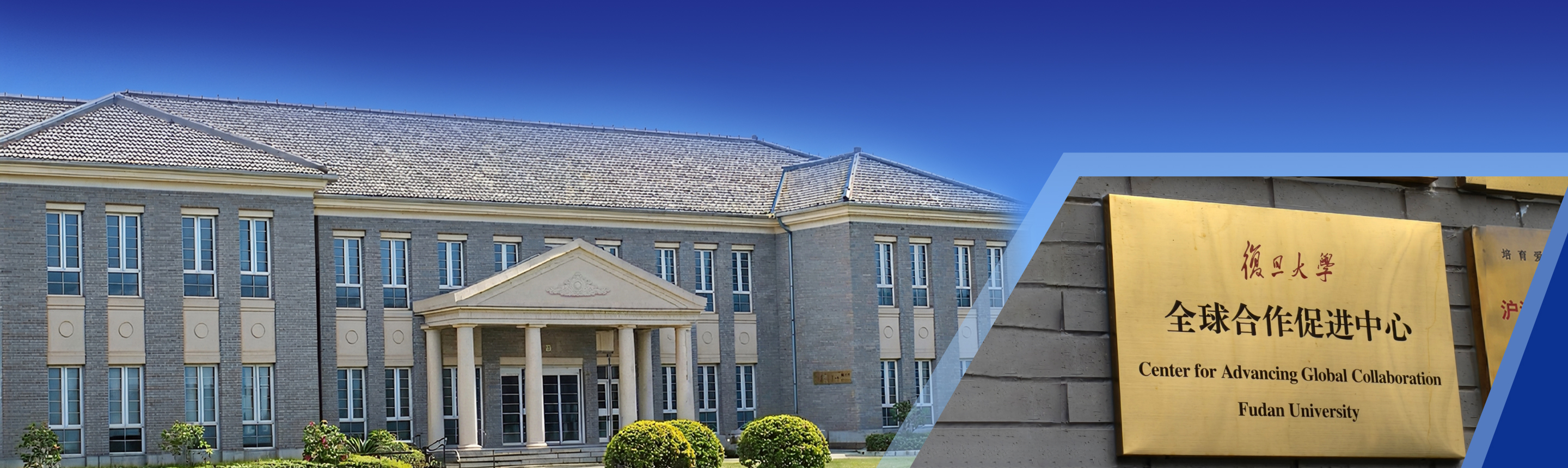
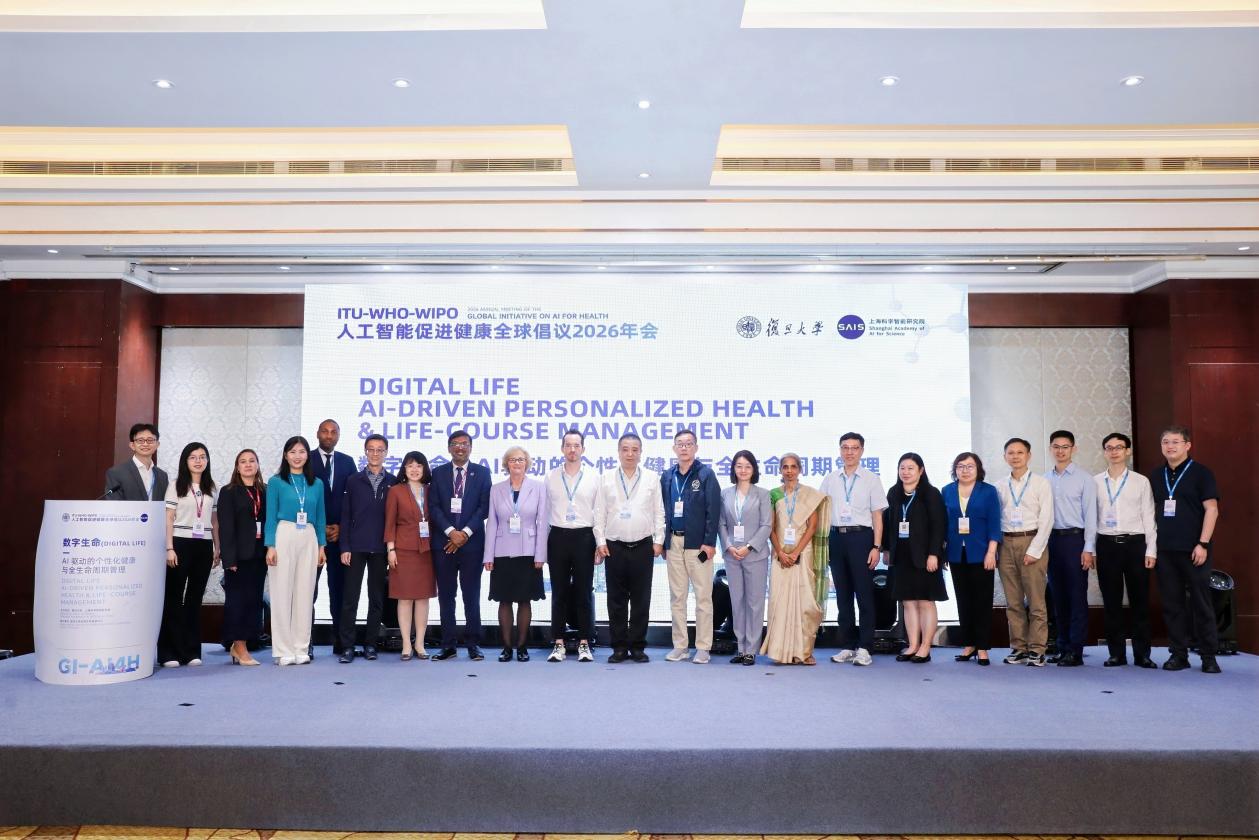
The forum “Digital Life: AI-Driven Personalized Health and Lifelong Health Management” took place on the afternoon of September 17. Jointly hosted by Fudan University and the Shanghai Academy of AI for Science (SAIS), and organized by Fudan University’s Center for Advancing Global Collaboration, the forum brought together researchers and representatives from international organizations and industry across countries and regions to explore new approaches to integrating artificial intelligence with the life sciences.
The forum formed a key part of the 2026 Annual Meeting of the Global Initiative on AI for Health (GI-AI4H), launched jointly by the International Telecommunication Union (ITU), the World Health Organization (WHO), and the World Intellectual Property Organization (WIPO). Established in 2023, GI-AI4H seeks to advance, facilitate, and implement AI applications in health. This year marked the first time its annual meeting had been held in China since the initiative’s launch three years ago.
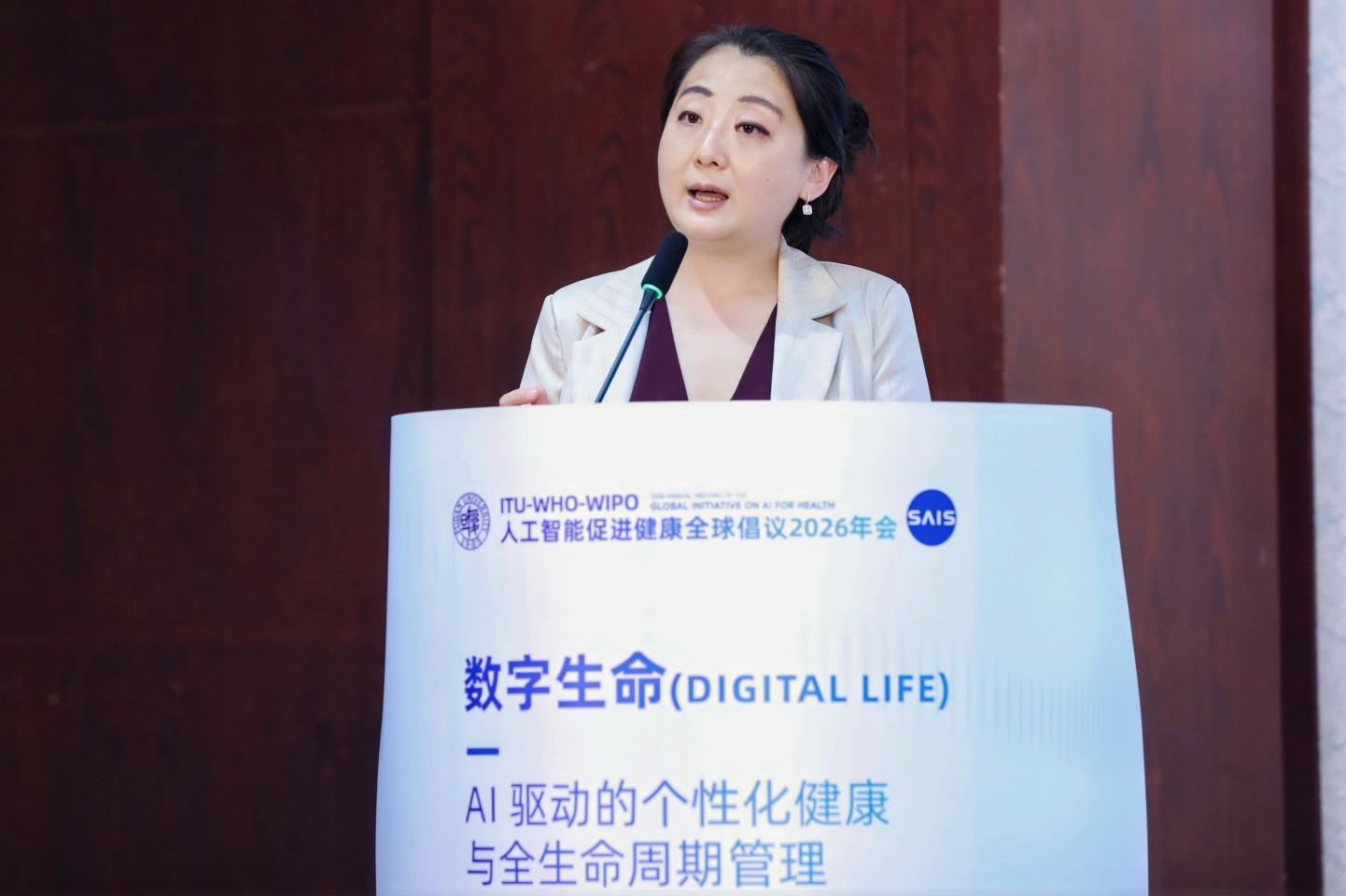
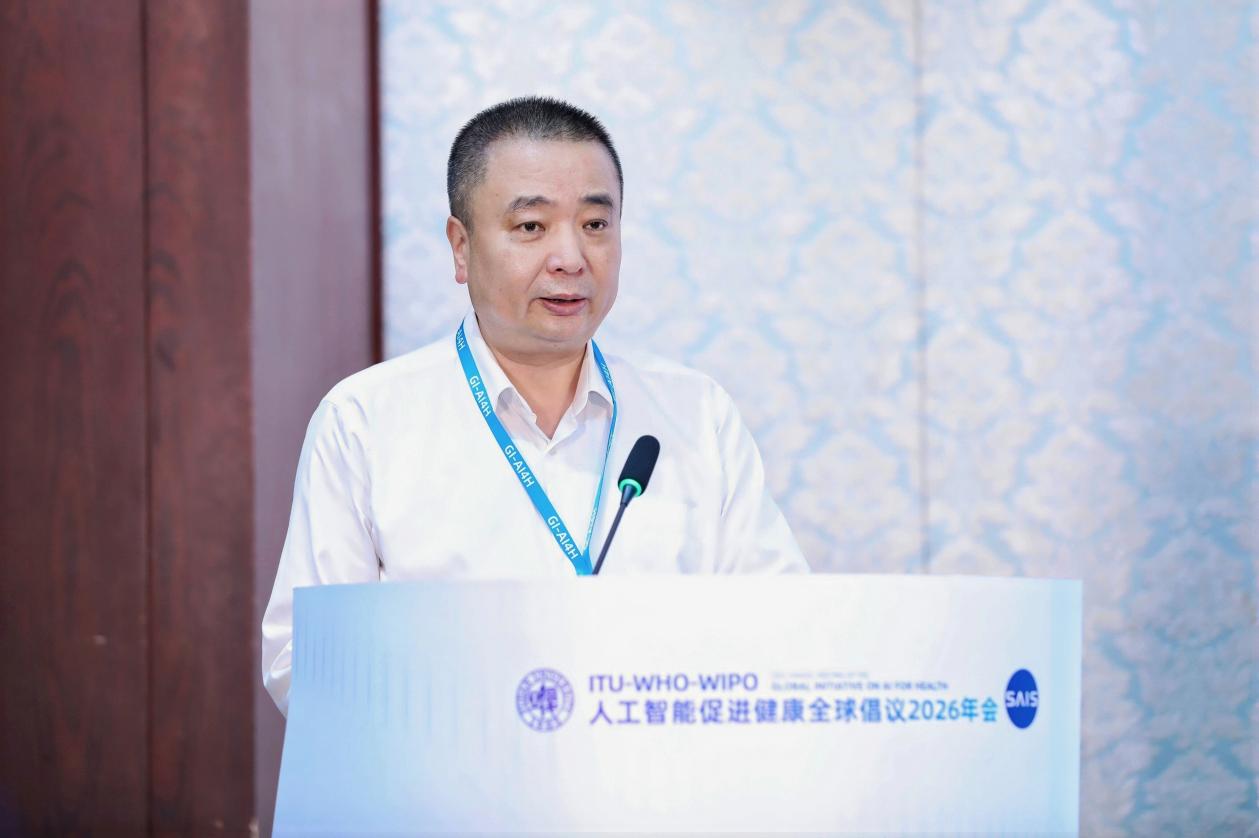
Opening remarks were delivered by Yu Zhao, Technical Officer in AI and Frontier Technologies at WHO headquarters and a member of the WHO Research Ethics Review Committee, and Jin Li, President of Fudan University and a member of the Chinese Academy of Sciences. The opening session was chaired by Mei Tian, Director of Fudan University’s Center for Advancing Global Collaboration and Dean of its Human Phenome Institute.
Participating experts included Joanna Batstone, Fellow of the Australian Academy of Technological Sciences and Engineering and Director of the Monash Data Futures Institute; Zhijie Liu, member of the International Eurasian Academy of Sciences and Executive Director of the iHuman Institute at ShanghaiTech University; Xin Gao, Director of the Center of Excellence for Smart Health at King Abdullah University of Science and Technology in Saudi Arabia; Sarah Teichmann, Fellow of the UK Academy of Medical Sciences and co-founder of the Human Cell Atlas; and Roland Eils, member of the German National Academy of Sciences Leopoldina and Executive Dean of Fudan University’s Intelligent Medicine Institute.
In her opening remarks, Zhao noted that the past two decades had seen unprecedented growth in the scale, diversity, and availability of data, ranging from genomics and molecular biology to environmental exposures, clinical records, wearable devices, and population health information. These developments now allow researchers to examine health throughout the human lifespan with previously unimaginable depth and detail. New computational methods also enable researchers to integrate evidence from diverse data sources, generating insights that support disease prevention, earlier intervention, and more personalized health management. Yet a fundamental question remains: how can scientific advances be translated into tangible health benefits for everyone? Zhao expressed the hope that the forum would encourage deeper reflection and strengthen collaboration across disciplines and sectors.
Jin explained that digital life uses vast amounts of data to model living systems, bringing scientific precision together with care for human life. Digital technologies are helping researchers understand life more systematically, identify risks, and intervene earlier to protect health. Building a comprehensive digital life framework, he emphasized, is far beyond the capacity of any single institution or country. The Alliance of Open Life Science, which Fudan helped establish, has brought together dozens of leading universities and research institutions in China and abroad. Looking ahead, Fudan will work with its domestic and international partners to advance life sciences data sharing, mutual recognition of models, and the joint development of standards, ensuring that digital life research benefits human health more widely and equitably.
Two consensus statements, “Phenotypic Twins” and “Health Age Index and Healthspan,” were officially released at the forum.
“Phenotypic Twins” addresses the scientific boundaries and core ethical principles of digital life as large AI models become increasingly integrated with multi-omics data. It calls for data security, algorithmic transparency, interoperability, equitable benefits worldwide, and the use of technology for good in the development of whole-person digital twins and medical AI models. It also advocates breaking down data silos and establishing standardized frameworks for collaboration.
“Health Age Index and Healthspan” addresses the challenges of global population aging and proposes a Health Age Index as a more scientifically grounded measure of an individual’s actual health status. Integrating molecular phenotypes, clinical indicators, and lifestyle data, the framework aims to provide a more precise basis for health assessment and personalized interventions throughout life. It seeks to shift health management from responding to disease after its onset toward earlier risk identification and intervention.
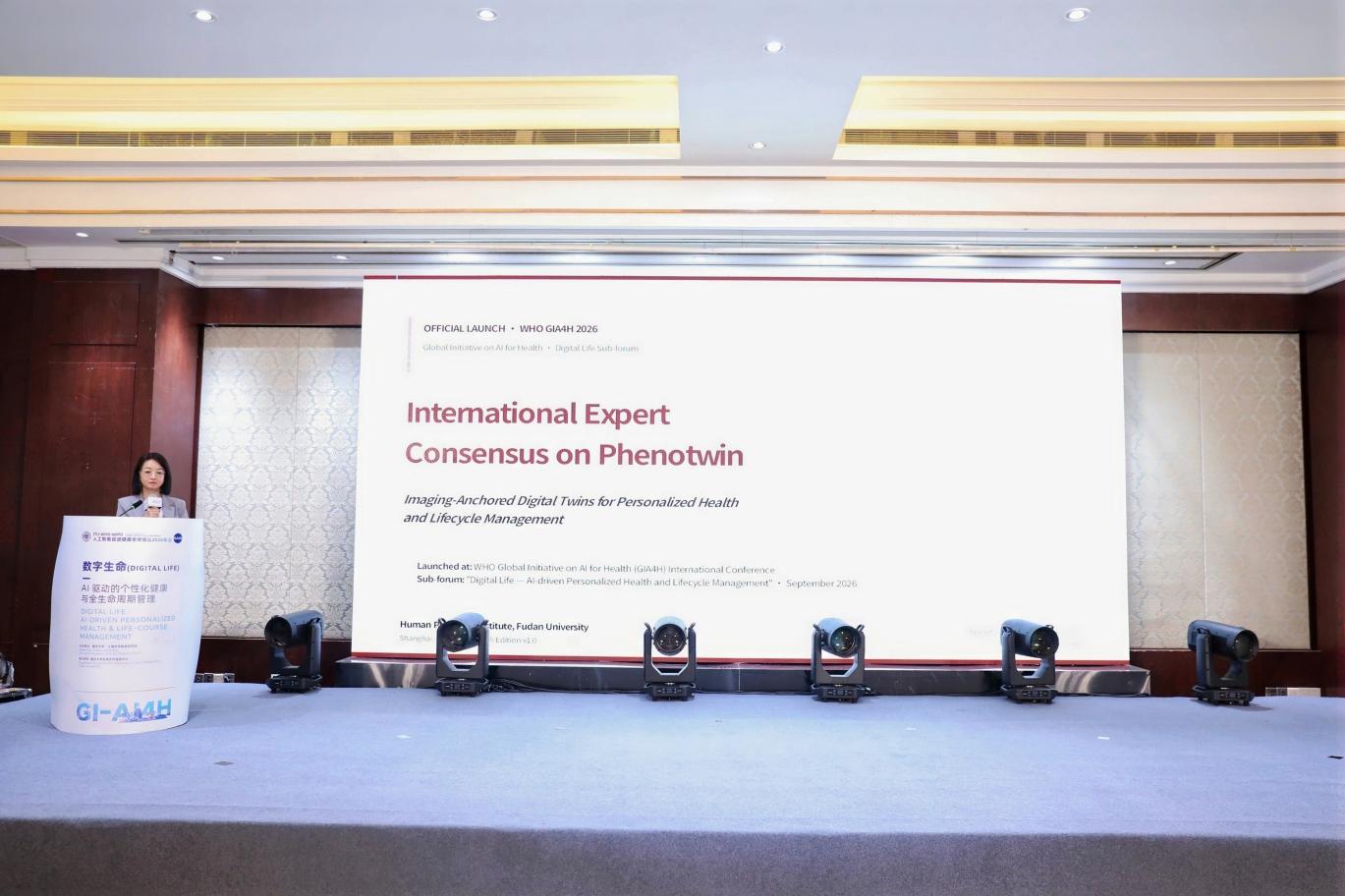
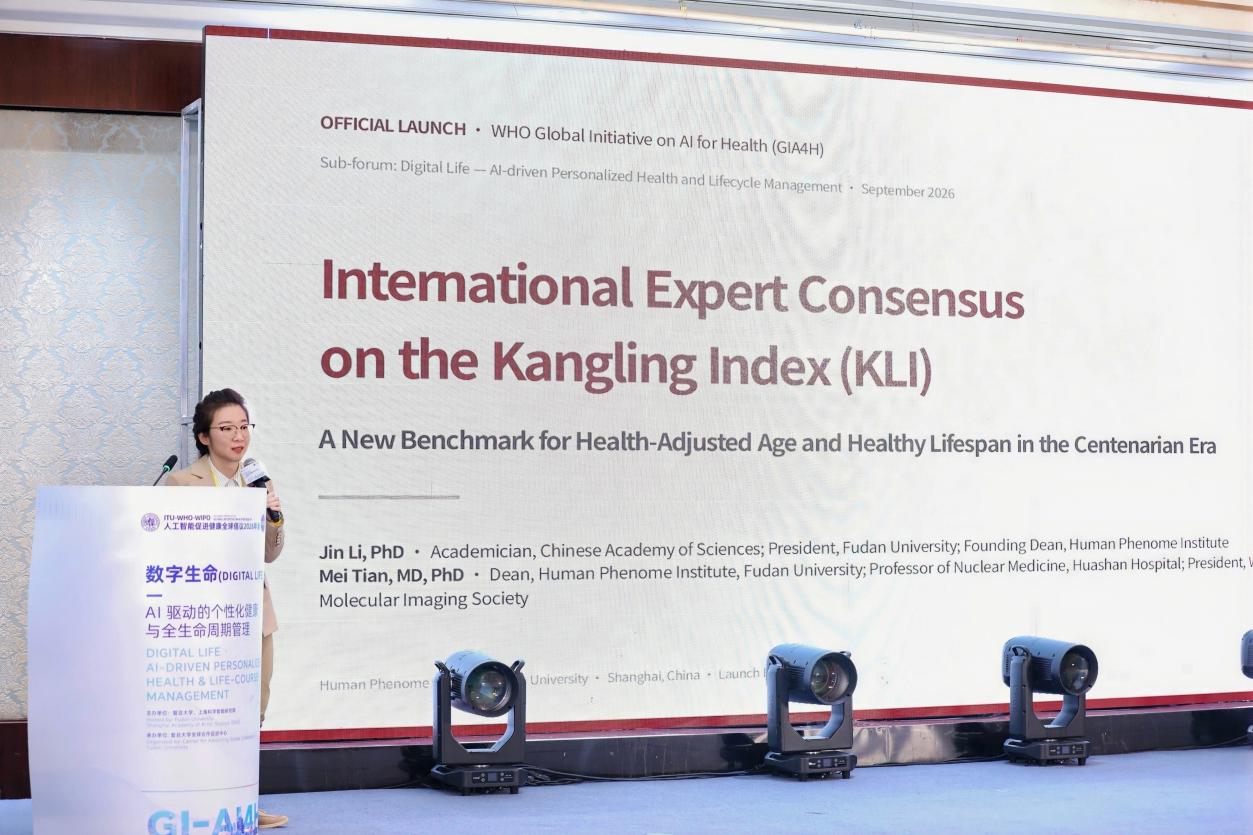
Mei Tian and Yidan Gao, a doctoral student at Fudan University’s Human Phenome Institute,
presented the two consensus statements, respectively.
Drawing on the convergence of human phenomics, medical imaging, and artificial intelligence, Tian explained the scientific foundations of digital life and its potential applications in disease risk identification, precision medicine, and lifelong health management. She noted that, since the previous year, the Human Phenome Institute had been collaborating with SAIS to translate human phenome research into advances in digital life. Interdisciplinary initiatives such as the Alpha Breakthrough Camp have supported this effort, which has already yielded preliminary results.
Joanna Batstone discussed AI applications in clinical monitoring, wearable devices, and neonatal health assessment. She emphasized that bringing health-tracking devices from the consumer market into medical practice requires improvements in measurement accuracy and clinical reliability, alongside careful consideration of data privacy, regulatory requirements, algorithm ownership, and ethical responsibilities.
In his presentation, Yoann Sapanel argued that health is not a collection of static indicators, but a dynamic trajectory that evolves over time. Through N-of-1 personalized modeling, AI can use individual data to continuously recalibrate interventions, helping healthcare move beyond assessments at a single point in time toward ongoing, precise health optimization.
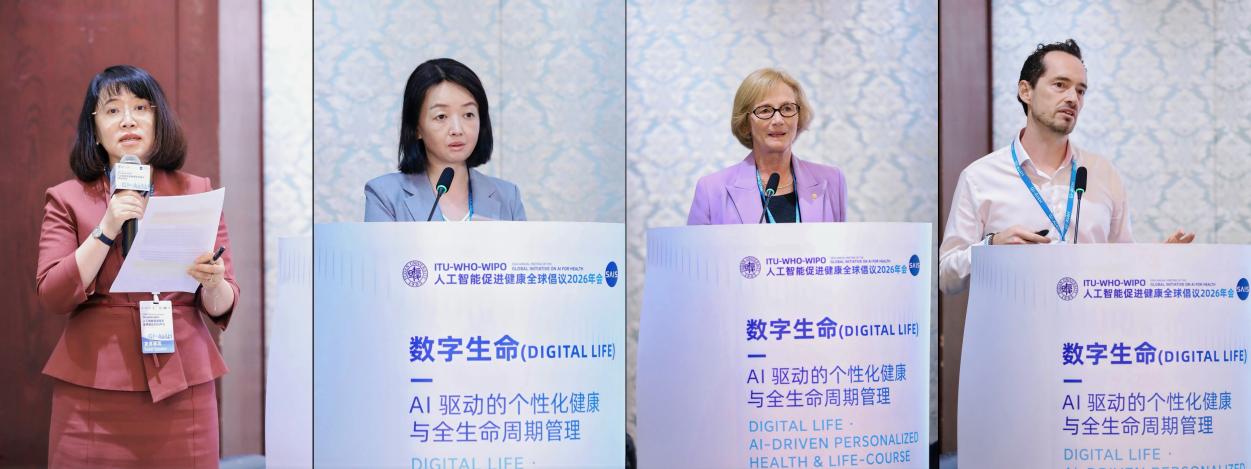
The keynote session was chaired by Libo Wu, Assistant to the President of Fudan University
and Chair of the Board of SAIS.
During the thematic session, Liu discussed how AI can advance research into G protein-coupled receptor (GPCR) mechanisms and support the entire drug discovery process. Gao presented recent advances in AI-driven cyclic peptide drug discovery and development. Joining online, Sarah Teichmann shared the latest progress in the Human Cell Atlas, data science, and artificial intelligence, while Roland Eils delivered an online presentation on digital preventive medicine.
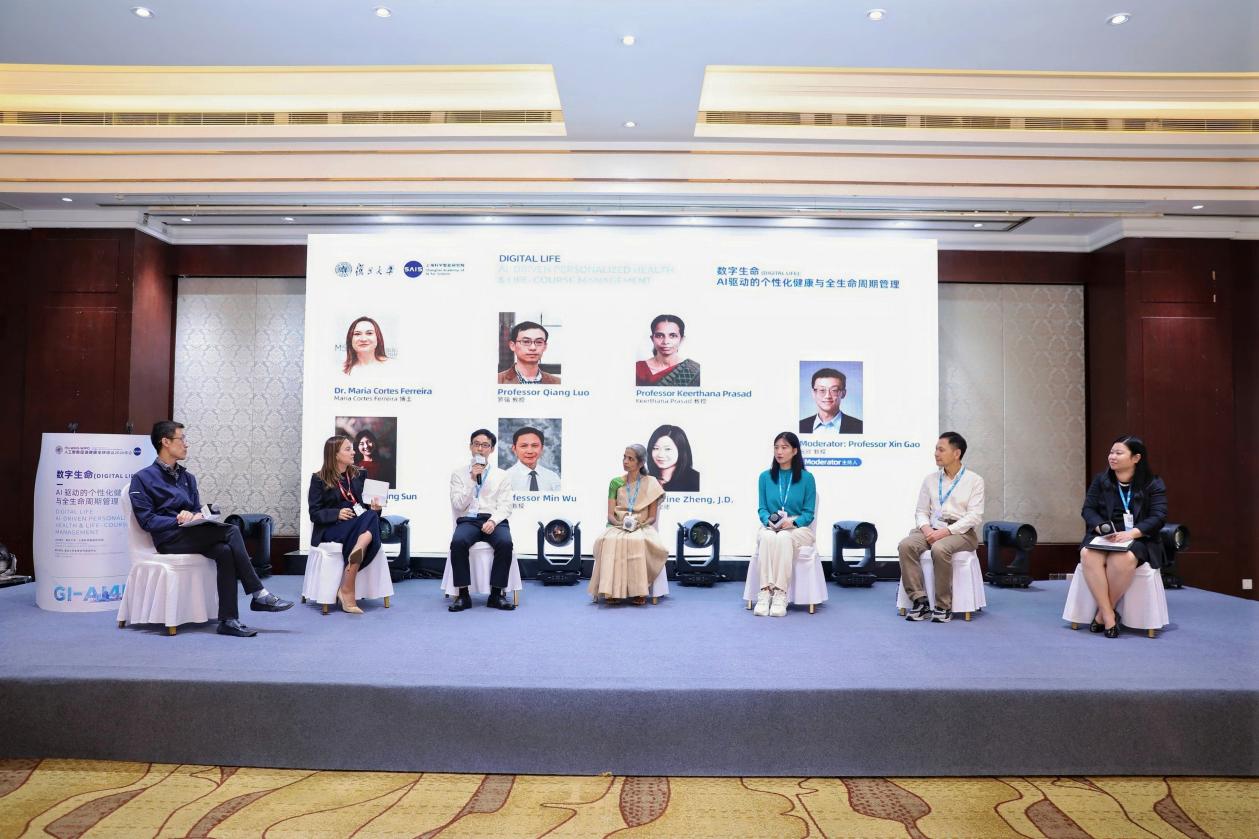
The roundtable, titled “AI Empowers Better Living: Digital Life, Healthy Life, Ethics, and Patent Innovation,” explored topics including cutting-edge data and complex biological mechanisms, medical imaging and trustworthy diagnosis, the implementation of digital health services, digital inclusion for older adults, the redesign of telemedicine workflows, data ownership, AI ethics, and the boundaries of intellectual property.
Participants emphasized that applying AI in healthcare requires attention not only to model performance, but also to data representativeness, clinical validation, real-world evaluation, and ongoing monitoring. Digital technologies must be integrated into actual healthcare workflows, with mechanisms such as physician-in-the-loop oversight, risk classification, and human takeover to ensure safe use. Data protection, algorithmic accountability, and intellectual property must be incorporated into governance frameworks from the outset of project design, rather than addressed only after technologies have been developed. Close collaboration across medicine, the life sciences, computer science, engineering, public health, law, and management is essential to balance open innovation with safety, effective oversight, and equitable access.
Covering the scientific foundations of digital life, technology development, clinical translation, health services, and governance, the forum provided a platform for interdisciplinary exchange among international organizations, universities, research institutes, healthcare institutions, and industry. Its consensus statements and outcomes will further advance collaborative innovation across AI, human phenomics, medical imaging, and multimodal health data, contributing insights and solutions toward a more proactive, precise, trustworthy, and equitable system of lifelong health management.

Copyright © Center for Advancing Global Collaboration Fudan University
