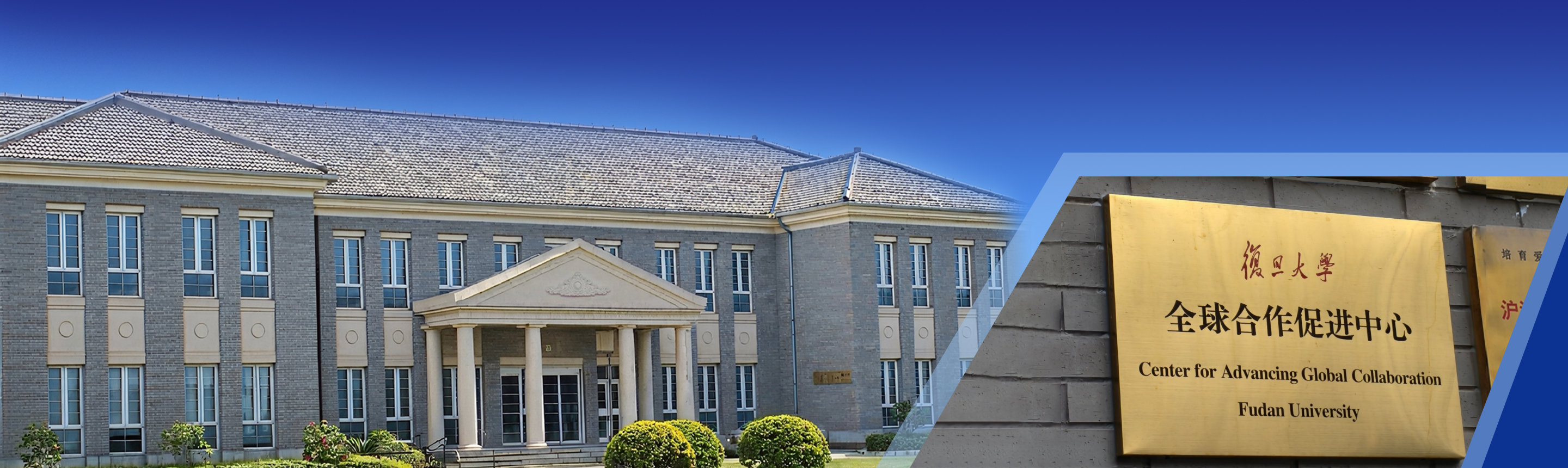
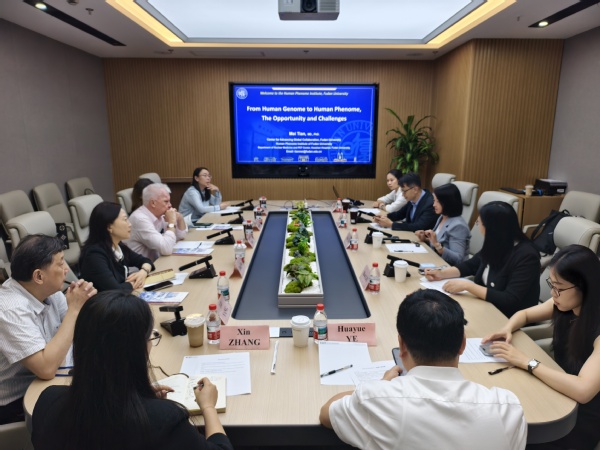
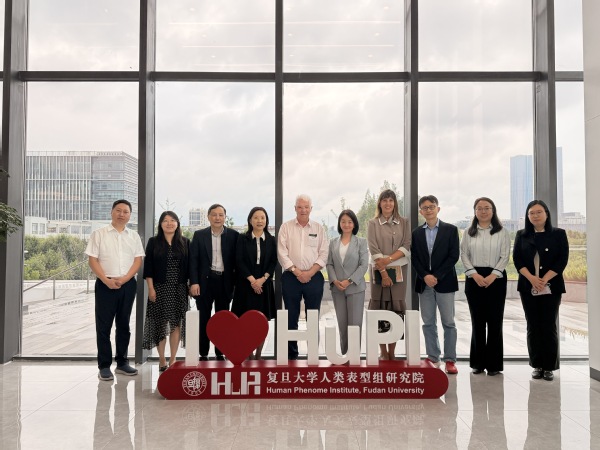
On the afternoon of July 1, a delegation led by Dr. Lawrence Banks, Director-General of the International Centre for Genetic Engineering and Biotechnology (ICGEB), visited Fudan University’s Zhangjiang Campus. The delegation held a meeting with representatives from Fudan University’s Human Phenome Institute, the Center for Advancing Global Collaboration, and the ICGEB China Regional Research Centre, and toured relevant laboratories. The two sides exchanged views on multi-omics research, data standardization, and global collaboration in open science, and reached a preliminary consensus on potential areas for future cooperation.
The delegation included Ling Fan, Executive Deputy Director of the Chief Scientist Office for the Innovative Drug R&D Special Project at the China National Center for Biotechnology Development (CNCBD); Ying Wang, Director of the Division of General Affairs and Supervision; Hongran Geng, Deputy Director of the Division of International Cooperation and Talent Development; and Associate Researcher Xin Zhang. They were joined by Marianna Maculan, Chief of External Relations at ICGEB, and Yili Yang, Director of the ICGEB China Regional Research Centre. The delegation was received by Mei Tian, Dean of Fudan University’s Human Phenome Institute and Director of the Center for Advancing Global Collaboration; Binzhi Qian, Vice Dean of the Institute and Secretary-General of the Alliance of Open Life Science; and other representatives from Fudan University.
At the meeting, Mei Tian warmly welcomed Dr. Banks and his delegation on behalf of the Institute. She introduced the disciplinary landscape and recent research advances at Fudan University’s Zhangjiang Campus, as well as the work of the Human Phenome Institute. The Zhangjiang Campus brings together interdisciplinary research in artificial intelligence, human phenomics, brain and intelligence science, environmental science, and public health. Since its establishment in 2017, the Human Phenome Institute has led Phase I and Phase II of the International Human Phenome Project, a Shanghai municipal science and technology major project. The Institute is committed to the systematic study of cross-scale, multidimensional phenotyping and data standardization, providing foundational support for precision medicine and the prevention and control of major diseases.
Binzhi Qian introduced the development of the Alliance of Open Life Science. Jointly initiated by Fudan University and universities in the Chinese mainland, Hong Kong, and Macao in 2025, the Alliance now comprises 39 council member institutions in China. It has also received positive responses and letters of intent to join from several international institutions, including the American Association for the Advancement of Science and the University of California San Diego. The Alliance seeks to promote high-level collaborative innovation through openness and sharing, and to build a global community for the life sciences.
Yili Yang presented the latest developments at the ICGEB China Regional Research Centre and its work in areas including vaccine development and diagnostic technologies. Both sides agreed that, as a new strategic frontier following genomics, human phenomics serves as a critical link between basic research and clinical and industrial applications and offers broad prospects for collaboration.
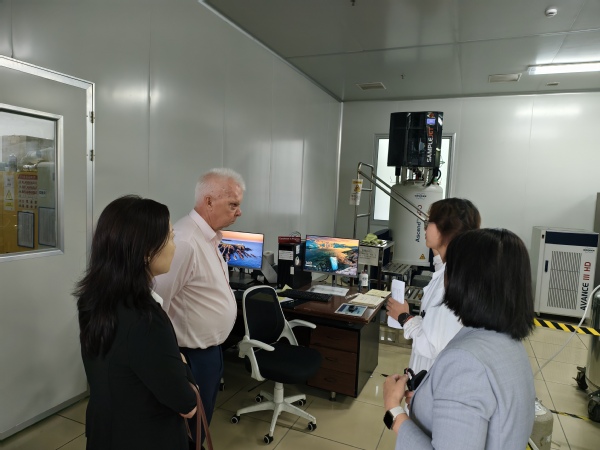
Following the meeting, Dr. Banks and his delegation visited the Human Phenome Institute’s precision human phenotyping platform in the Administration Building on the Zhangjiang Campus. The platform integrates multi-omics and phenotyping capabilities spanning transcriptomics, metagenomics, proteomics, metabolomics, imaging, human functional assessment, metabolism, sleep, and environmental exposure.
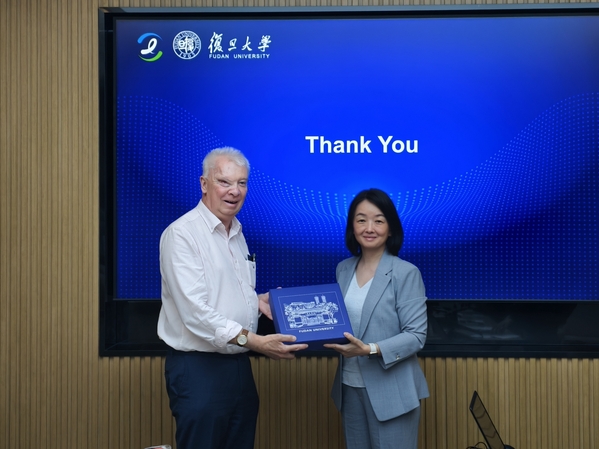
The visit deepened mutual understanding between Fudan University and ICGEB in human phenomics, multi-omics technologies, and global open science, laying a solid foundation for substantive cooperation in these areas.

Copyright © Center for Advancing Global Collaboration Fudan University
